
Dolapo Daramola will be the first to tell you that Àjàrà Foods was founded to make cooking easier. She will also tell you, with a laugh, that building it has been anything but soft.
“Apparently, the soft life is mainly for our customers,” she says. “We have already handled the drama behind the scenes.”
She started in January 2025. In her kitchen. At 50 years old. With three products and a problem she had been watching for years.
The problem was not that Nigerians do not want to cook. Anyone who has ever watched a Nigerian mother take over a kitchen knows that is not the issue. The problem is everything that happens before the cooking actually starts. The washing, the blending, the grinding, the prepping. The part that takes up so much time and energy that by the time you are ready to actually cook, you are already exhausted.
Dolapo’s own children gave her the clearest version of this insight. They did not mind cooking. They just did not want it to take all their time. They would rather order food than spend hours on prep work. So she asked herself a simple question: what if the most stressful part was already done for them?
That question became Àjàrà Foods, a range of carefully prepared Nigerian cooking bases, pepper mixes, chilli dips, and prepared palm oil products designed to help people cook authentic Nigerian meals faster, more easily, and with better consistency. And the proof that it worked? Those same children who would rather order food now reach for Àjàrà products and cook instead.
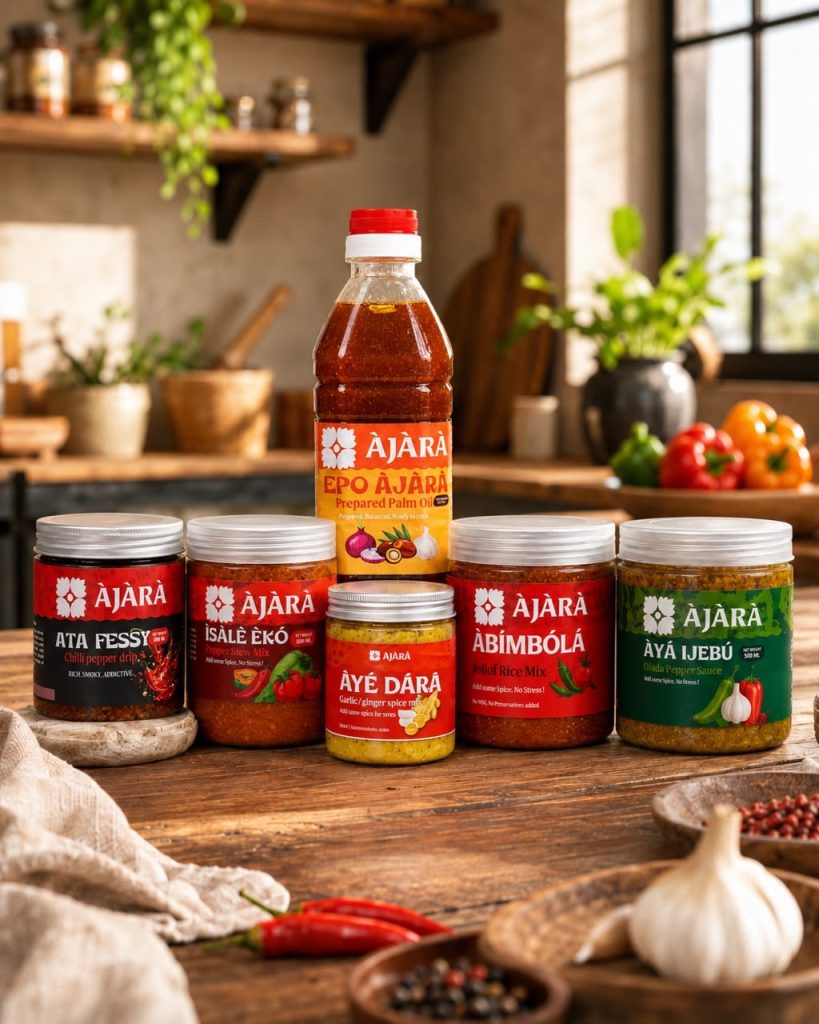
The name came from her mother. About five years ago, her mother started calling her Àjàrà, a Yoruba word meaning fruitful vine. When Dolapo asked what it meant, her mother told her she was a giver, a solution provider, that anyone who came to her with a problem would be helped. When the time came to register the business, no other name felt right.
In less than a year, what started as three products in a home kitchen has grown into a structured food processing operation with six products, its own office and production space, NAFDAC certification for four products, an all-women production team, a presence on Chowdeck, and customers in the UK and Canada. Àjàrà has been at the last two GTCO Food and Drink Festivals, where the response confirmed that the demand is real and significant.
But not every moment of growth has come from the big stages. One of the moments that pushed Dolapo most did not happen at a festival. It happened at a networking event, when she was introducing Àjàrà to someone who tasted the products and looked at her with genuine confusion.
“How have you had products this good for over a year and I have never heard about them?”
She laughed in the moment. But the question stayed on her mind long after.
“A good product does not automatically sell itself,” she says. “People first have to know that it exists and understand the problem it solves.”
That experience changed how she approached visibility, marketing, and storytelling around the brand. It pushed her to show up more, to tell the Àjàrà story more deliberately, and to take the products directly to the people who needed them.
Building the business has come with its share of real challenges. Food processing is capital intensive and the costs of equipment, packaging, electricity, and raw materials add up quickly. Most of Àjàrà’s raw materials are seasonal, which means pricing and availability can shift in ways that are hard to plan around. Getting customers to trust a new product in a category where people have been doing things the same way for generations has also taken patience and deliberate effort. Nigerians are used to buying their peppers fresh from the market and cooking from scratch. Convincing them that Àjàrà could give them something better, not just more convenient but genuinely good, took time.
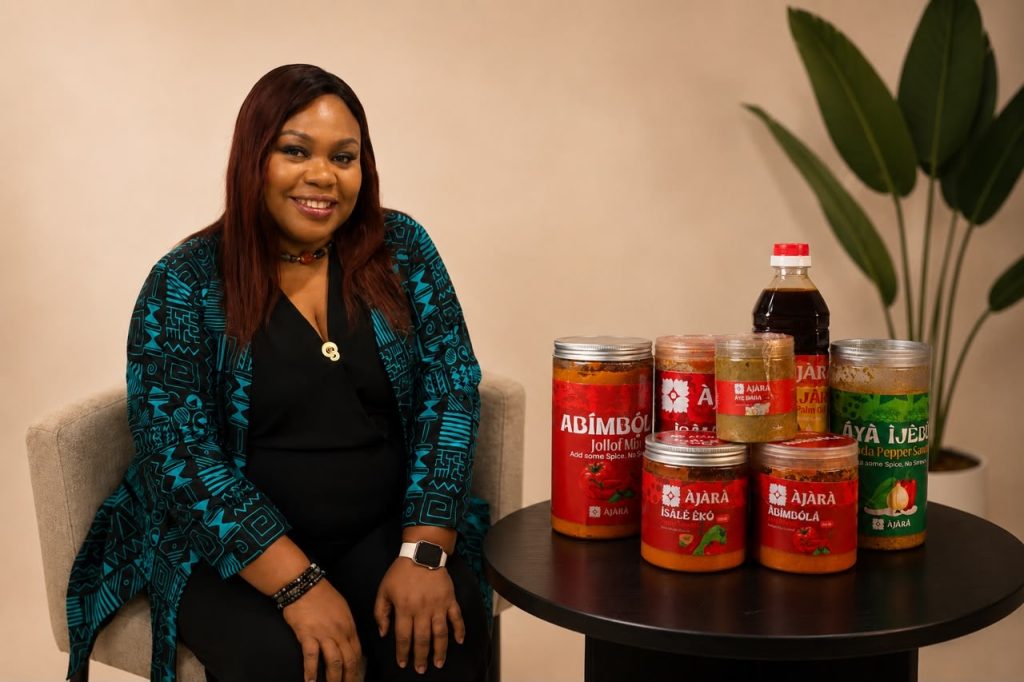
And then there is the learning curve that nobody warned Dolapo about. Starting a food processing business at 50 meant becoming a student again in ways she did not anticipate. Production, food safety, packaging, digital marketing, social media, finance, technology. All of it had to be learned from scratch.
She has also had to learn Canva, CapCut, and ChatGPT. Her children and her team find this endlessly entertaining.
There are days she works hard making videos to promote Àjàrà’s products, only for her daughter, who is also the company’s COO, to tell her that the videos can only go on her personal pages. Not on Àjàrà’s platforms.
“Apparently, only I appreciated my efforts,” she says.
But underneath the humour is something genuinely moving. A woman at 50, learning algorithms and video editing and AI tools because she believes in what she is building enough to figure out whatever it takes. That is not a small thing.
The products themselves carry personal history. Àbímbólá Jollof Mix is named after one of her sons, the known party rocker of the family. Ata Fessy Chilli Pepper Dip was named in honour of her late father, Professor Festus Akintola.
“I wanted to immortalize his name,” she says. “I wish he was alive to see my dreams come into manifestation.”
That line carries the whole weight of what Àjàrà is really about. It is a food brand, yes. But it is also a family story, preserved in product names and recipes and the quiet determination of a woman who decided that 50 was not too late to build something new.
What this journey has taught Dolapo is that courage is not the absence of uncertainty. It is the willingness to keep moving even when everything is not yet perfect. She has learned that she is more resilient and adaptable than she previously gave herself credit for. And she has learned, through trial and very real error, that age and fear are poor reasons to limit what you are capable of.
Her advice to anyone starting out in the food industry is the kind that only comes from having done it.
Start with a real problem, not just a product you enjoy making. Test with honest customers. Document your recipes. Never compromise on hygiene, food safety, or consistency. Understand your costs before setting your prices, because revenue is not the same as profit. Build systems that another trained person can follow. And do not hide while waiting for everything to be perfect. Tell people what you are building.
In the next three to five years, Dolapo wants Àjàrà to be one of Nigeria’s most trusted convenience food brands, with wider retail distribution, structured export channels for the UK, Canada, and the US, and a more automated production facility. The goal is not just to grow the business but to build something that creates employment, particularly for women, and serves both individual customers and institutional buyers at scale.
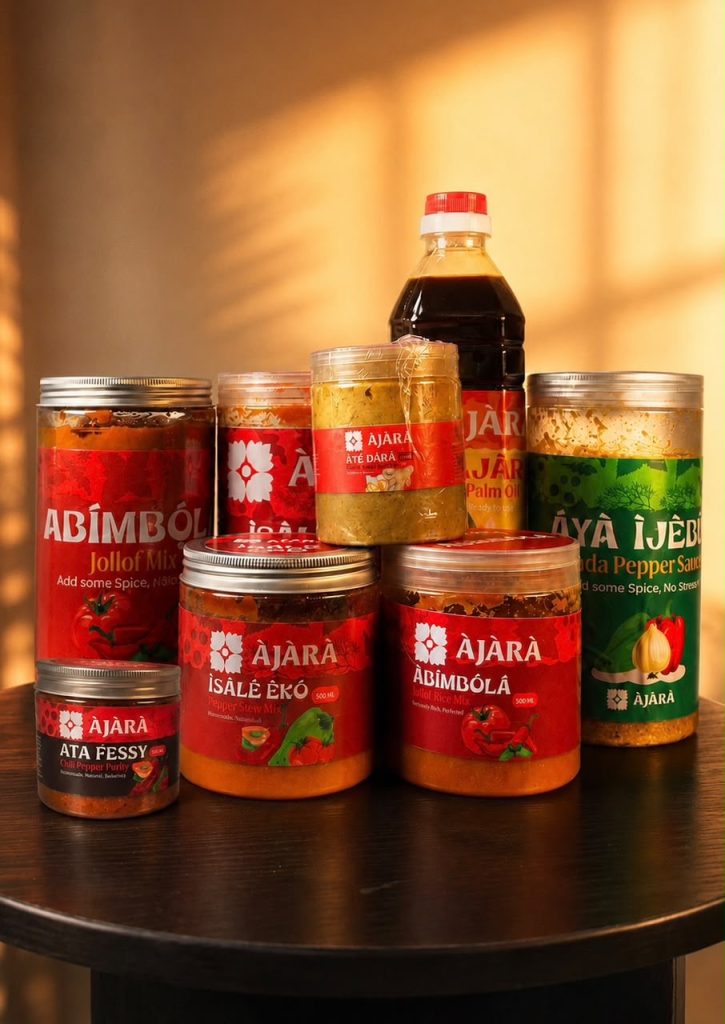
One customer messaged her after tasting the Ata Fessy Chilli Pepper Dip to say that her hands are blessed. Dolapo says she could not stop grinning for the rest of the day.
That is the whole point, really.
She started at 50, in her kitchen, with a simple observation about how her children related to cooking. And she is building something that carries her family’s names, her mother’s words, her father’s memory, and a genuine belief that it is never too late to solve a problem and build something meaningful.
Follow Àjàrà Foods on Instagram and all social platforms for updates, recipes, and the ongoing adventure of a founder who is still figuring out which videos can go on the brand page.